

TESL professionals in Ontario are focused on their current responsibilities and challenges while benefiting from the dedication, innovation and steadfastness of those who have come before us. The TESL profession in Ontario and across Canada has been shaped by educators who did more than teach. They built professional associations, developed standards, mentored new instructors, encouraged scholarship, introduced innovative practices and technologies and created opportunities for educators to learn from one another. This is the first in a series of blog posts highlighting the achievements and lasting contributions of pioneering TESL professionals. Each TESL hero is involved in the writing of their profile to ensure accuracy.
The first TESL hero is John Sivell. Surveying his career at Brock University and his extensive contributions to TESL Niagara, TESL Ontario and TESL Canada, we can recognize both his remarkable record of service and the importance of professional leadership in building the TESL Ontario community we know today.
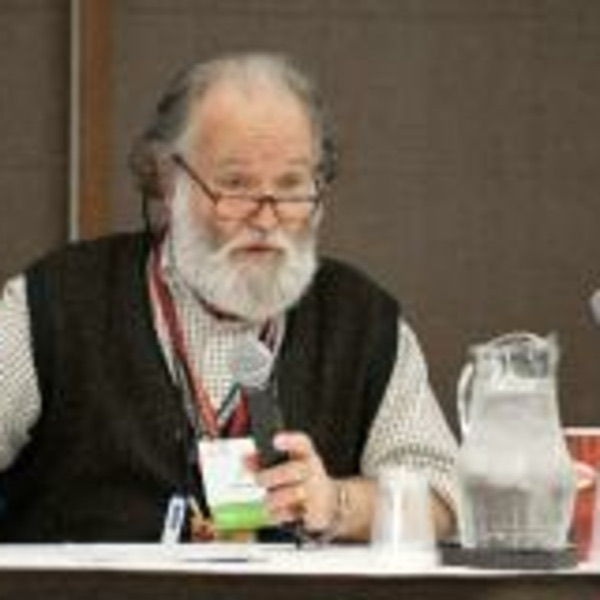 His contributions to TESL in Canada began long before many of today’s technologies, professional standards and teacher-training structures existed.
John brought a rich international perspective to his work. Before returning to Canada and beginning his career at Brock, he taught English in England and France and worked at universities in Iran, Saudi Arabia and Morocco.
When he joined what would become Brock University’s Department of Applied Linguistics in 1983, he brought those experiences with him. Over the following three decades, he taught future and practising language educators in Brock’s TESL program, help launch generations of English language teachers, me included. At the same time, he gave generously of his time and expertise to the professional organizations that brought those teachers together. He also conducted research, set up an annual TESL Colloquium, published scholarly work, founded the Centre for Intercultural Studies, served as department chair and took on senior university leadership responsibilities, including serving as Dean of Humanities.
For us as a TESL community, his most enduring contributions extended beyond the university. John was a founding member of TESL Niagara and served the organization in a variety of executive positions.
Champions like John and his colleagues have to organize meetings, encourage participation, share ideas, support new teachers and create the professional community that others later inherit.
Over time, some of the Brock students he had helped prepare as teachers became active members of TESL Niagara themselves. A new generation was taking its place in the professional community that their professor had helped establish.
Dr. Sivell’s contribution to our profession extended far beyond Niagara. He became a national leader in the field, with roles that included membership on the Registry of Canadian Language Benchmark Experts and service on the CCLB Board of Directors. Those roles expanded his influence in the TESL community and placed him at the heart of a national organization representing English language educators. He used this opportunity to help shape conversations about teacher professionalism, teaching standards, research and the future of language education in Canada.
His involvement with TESL Canada took many forms. John contributed to the TESL Canada Teacher Resource Centre, helping make practical teaching resources available to educators across the country.
He also served for five years as editor of the TESL Canada Journal, where he led efforts to secure the journal’s first Social Sciences and Humanities Research Council of Canada publishing grant and to bring the periodical entirely online. In this role, he guided researchers and practitioners to share ideas encouraged professional dialogue and helped preserve the evolving knowledge of the field.
His scholarship also addressed areas that became increasingly important to Canadian language educators. One area was professional standards for adult ESL teachers. His work examined the development of standards and the collaboration among professional organizations that helped strengthen TESL as a recognized profession in Canada. Another area was reading and literacy. He viewed reading not simply as understanding a text once and moving on, but as an active process through which learners could repeatedly explore meaning, vocabulary, grammar and discourse. His 1989 TESL Ontario paper, “Reading is a Process, Too,” captured this perspective early in his career.
More than two decades later, Sivell and Chirawibha Sivell developed this philosophy further in “Sending Them Back to the Well.” Their approach encouraged teachers to slow down, turn fewer pages and help learners engage more deeply with texts they had already encountered. Rather than constantly introducing new material, teachers could return to a single text from different linguistic and communicative perspectives. This combination of reading theory and practical classroom pedagogy is characteristic of Sivell’s larger contribution to TESL.
John was also an important leader within the TESL Ontario community, contributing his experience, scholarship and professional perspective to the development of the field in the province. In 2012, TESL Ontario recognized John’s contributions to the profession with the Distinguished Contribution Award. This was a fitting acknowledgement of an educator whose influence enhanced our provincial TESL community. 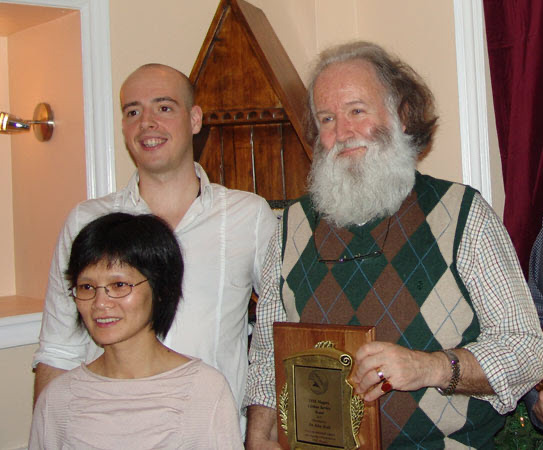
Throughout his career, John moved comfortably between the university classroom and the professional TESL community. Research informed teaching. Teaching informed professional development. Professional organizations connected educators who might otherwise never have met. Students became colleagues.
John retired from Brock in 2016, turning his hand to creative writing as a member of the Niagara-on-the-Lake Writers’ Circle; his novel, Providence Point (under the pen name R. C. Highcroft) can be found on Amazon.ca and his Instagram posts at @r.c. highcroft. However, his principal legacy is in the educators he taught and mentored, the professional organizations he helped build and lead, the scholarship he produced, and the countless language learners subsequently taught by teachers whose careers he helped shape. There is a telling multiplier effect in our profession. Teach a teacher and your influence can reach classrooms you will never visit and learners you will never meet.
Celebrating John’s career is an opportunity to recognize the value of professional service, mentorship and community in TESL today. The organizations and networks that support language educators exist because people chose to contribute their time, knowledge and leadership and because new generations choose to continue that work.
From helping establish TESL Niagara to providing leadership within TESL Ontario and serving with the CCLB, John Sivell helped build and strengthen our professional community. His career reminds us that one of the most lasting contributions an educator can make is to create opportunities for other educators to learn, connect and lead.
Resources:
Highcroft, R. C. (2025). Providence Point. Tellwell Talent.
Photo credit: https://brocku.ca/brock-news/2011/05/applied-linguistics-chair-awarded-for-contributions
TESL Ontario Distinguished Contribution Award, https://teslontario.org/awards
TESL Ontario Annual Report, https://www.teslontario.org/uploads_new/aboutus/annualreports/AnnualReport2023.pdf
Sivell, C., & Sivell, J. (2012). Sending them back to the well. Contact, 38(3), 9–18, https://contact.teslontario.org/wp-content/uploads/2016/04/ContactSummer2012.pdf
Sivell, J. (2005). Second language teacher education in Canada: The development of professional standards. TESL-EJ, 9(2).
Sivell, J. (1989). “Reading is a Process, Too.” In TESL ’88: Raising the Profile (pp. 77–81).

Leave a Comment
Your email address will not be published. Required fields are marked *