
As I stand at the whiteboard, I constantly lament how poor my drawing skills are. “Guys, does this look like a boat?” I ask, my head tilted to the side. The students laugh, and we move on. I’ve known from an early age that I can’t draw and that I’d never be an artist. But guess what? I bravely signed up for online art lessons. And, slowly but surely, my confidence has grown. I now see inspiration everywhere, from flowers and trees to a stack of colourful plates on my counter. I have become brave enough to wander into art supply stores and share my work with fellow students. As it turns out, there are countless ways to create beautiful, imaginative, and expressive works of art without having to draw.
Most importantly, I’ve come to recognize how painting makes me feel. I get lost in it. For a short time, nothing else matters. My “to-do” lists and other stresses are pushed away. It’s amazing how much freer I feel as I swirl the paint around the paper, add colours, and watch my design take shape. This got me thinking about our ESL students. Wouldn’t it be nice if they too could benefit from the release I feel when I paint? Could I use visual art in the classroom? I did a little research, and it suggests that, indeed, as people create art, from simple doodling and shaping clay to more elaborate projects, they immerse themselves in the process and are able to tune out distractions. Further, in their study on the effects of visual art, Kaimal, et al. (2016) found that not only did the participants enjoy doing the art, but they also felt more relaxed and their cortisol levels dropped significantly. Artist Farzaneh Sadighian (2025) also writes about these potential benefits in her article:
Painting and artistic expression are more than hobbies—they are powerful tools for managing stress and improving mental health. By engaging in painting, individuals can reduce cortisol levels, experience emotional release, and enhance overall well-being. Importantly, these benefits are available to anyone, regardless of artistic skill.
It is striking that the skill level and complexity of the art project are immaterial to its benefits. Even a simple activity with paper and markers can reduce our students’ cortisol levels, weaken their affective filters, and increase motivation. These findings are incredibly important to us as ESL instructors given the significant anxieties our students experience as they adjust to a new country, culture, and language. And don’t forget that some may also be coping with trauma from their homelands and fear for family members still there.
As they create on the page, our learners can show concepts, thoughts, and ideas that they would struggle to relay in sentences. Under our guidance, they can help each other interpret their art, while learning new grammar, vocabulary, and discussion skills along the way. Students can also create art together. For instance, they could work on a collage in pairs or groups. We could start by displaying a piece of abstract art and asking the class about its shapes, colour schemes, and the artist’s possible inspiration. We could then show a photo of the mountain range, lake, or other physical object that the artist evokes in the painting. For example, here is some art by one of my colleagues, Raquel Faye Mayouhas, and the photo she based it on:
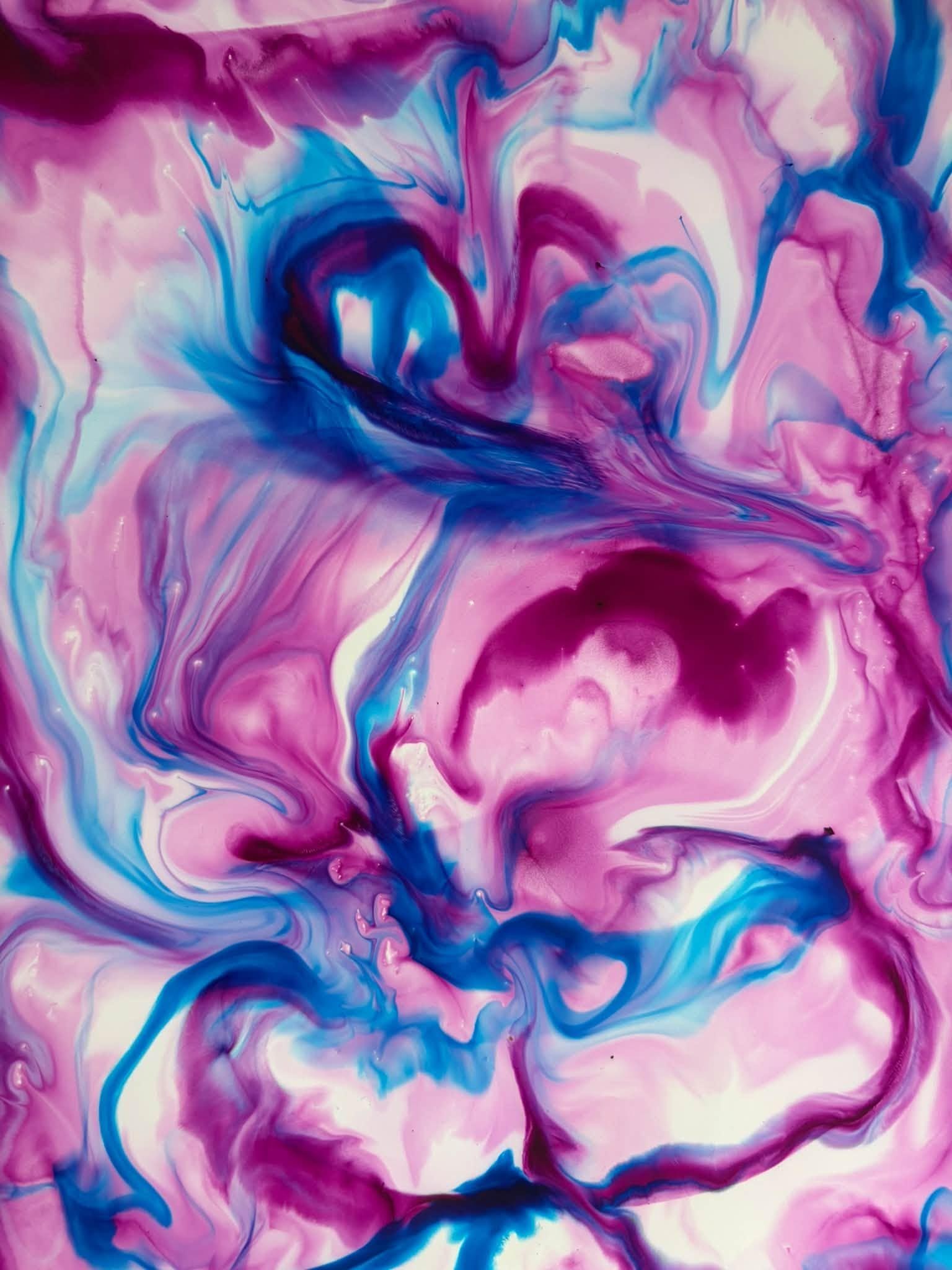
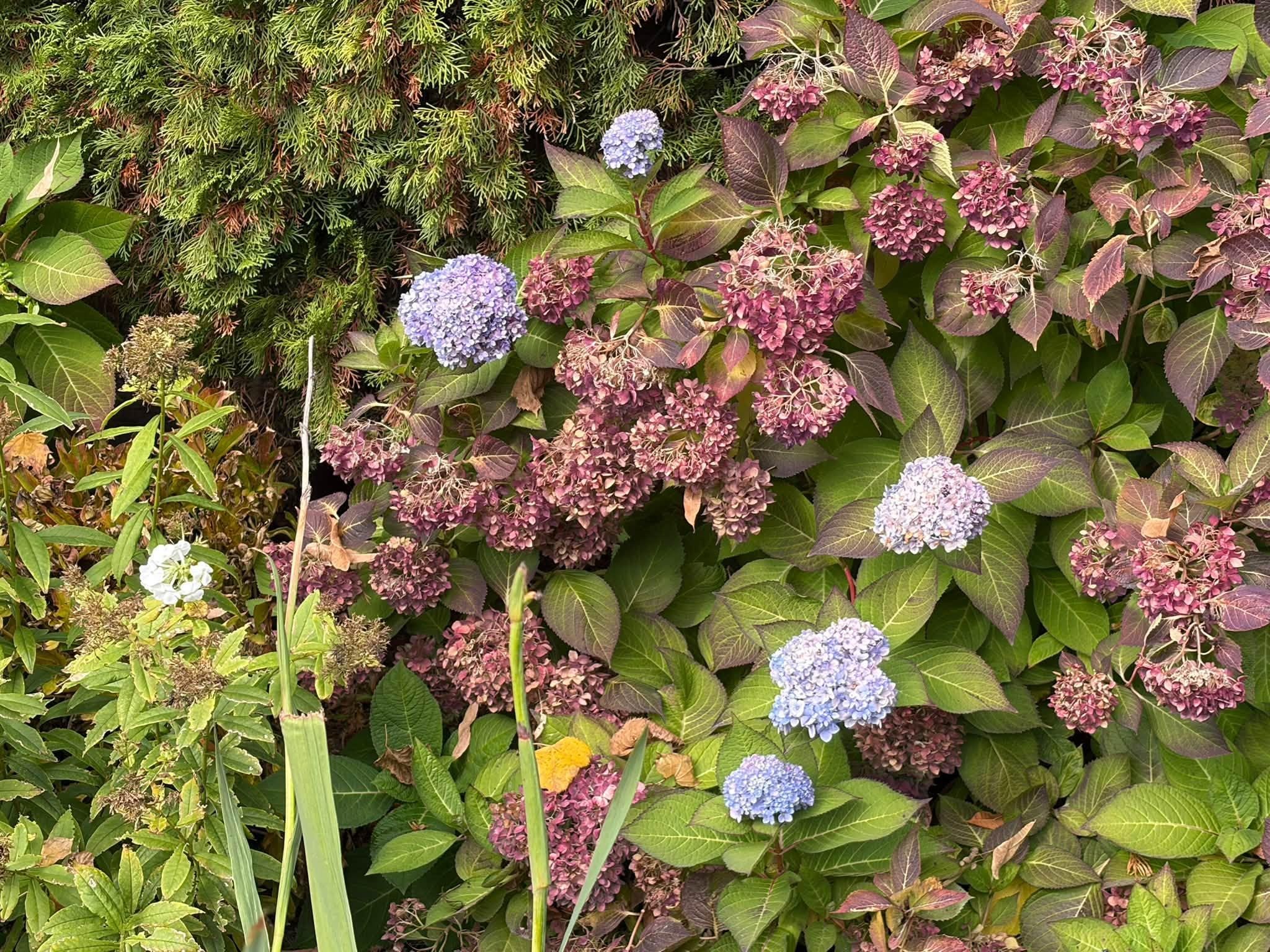
Afterwards, the class can choose a couple of their favourite shapes and colours from the art we have shown them and recreate their own on a small scrap of paper (with gel markers, pencil crayons, or paint). Then, they can work with their peers to put the scraps of paper together in whatever way makes them happy. Afterwards, they glue the papers together into a final product to present to the class, explaining their choices and what the painting signifies to them.
As we lead the above painting and collage activity in class, we not only reduce the students’ cortisol levels, but we increase their engagement, boost their pride and confidence and equip them with new language skills. We also introduce them to colour palettes and the value and beauty of abstract art. And there are many other activities that can bring the same results. Here are a few for you to consider:
- Ask students to present their favourite art from their homeland. How does it make them feel? What style does the artist use? The class can identify the lines, shapes, and colours of the painting and then recreate it in their own way. This, of course, increases pride in culture and intercultural communicative competence. For more, see my previous post about presenting and discussing visual arts from around the world.
- Have a student start a drawing and then pass it around the table for each person to add to it.
- Display a comic strip with the last panel blank for students to create.
- Print out some mandalas and have students colour them and then design their own.
- Bring some old photographs from vintage shops to class or show students online images you have permission to use. Ask students to paint something that recreates the photo or the story it evokes.
It doesn’t matter what type of art you do. Just remember the rewards of doing it.
Resources
Kaimal, G., Ray, K., & Muniz, J. (2016). Reduction of cortisol levels and participants’ responses following art making. Art Therapy, 33(2), 74–80. https://doi.org/10.1080/07421656.2016.1166832
Sadighian, F. (2025). How painting and art can reduce cortisol and boost well-being. FariPalette. https://faripalette.com/how-painting-and-art-can-reduce-cortisol-and-boost-well-being/
Leave a Comment
Your email address will not be published. Required fields are marked *