
As a champion of technology-enhanced language education and a pioneer in computer-assisted language learning (CALL), Deborah Healey continues to contribute to the TESL profession decades after completing her undergraduate degree in 1974 at Queen’s University in Kingston, Ontario.
She continued her studies by earning a master’s degree in linguistics and a doctorate from the University of Oregon with a specialty in learner choices in self-directed second language learning.
Dr. Deborah Healey has been a pioneering voice in CALL, educational technology and English language teacher education. As an educator, speaker, researcher, author, consultant and former president of TESOL International Association, she has helped shape how language teachers understand, adopt and evaluate technology. Her contributions have influenced English language education internationally, including important developments in Canada’s adult settlement language training sector.
Her professional career included teaching and leadership positions at Oregon State University and the University of Oregon. As the director of the English Language Institute at Oregon State, she combined educational administration with innovation in language teaching. At the University of Oregon, she contributed to the development of online teacher education programs that extended professional learning opportunities to educators globally, including the massive open online course (MOOC) Shaping the Way We Teach English. 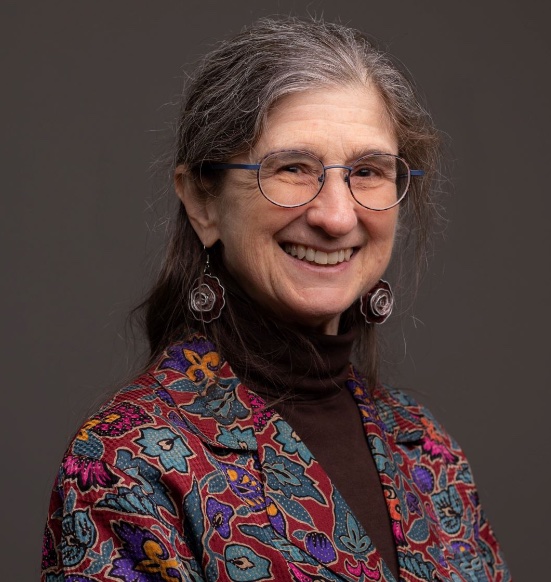
Deborah’s impact extended beyond educational institutions through her leadership in professional associations. She chaired TESOL’s CALL Interest Section from 1991 to 1992, served in numerous association leadership roles, including chairing TESOL international conferences, and served as president of the TESOL International Association from 2019 to 2020.
Her presidential term coincided with important organizational discussions about diversity, equity and inclusion and the unprecedented disruptions caused by COVID-19. Her leadership contributed to the association’s efforts to respond to these challenges and expand opportunities for professional participation.
Healey’s contributions to CALL began when computers were still relatively unfamiliar tools in language classrooms. Rather than viewing technology as a novelty, she consistently emphasized its potential to support sound pedagogy, learner independence and meaningful communication.
During the 1990s, she contributed significantly to the development of resources and professional networks supporting teachers interested in educational technology. She edited the CÆLL Journal (Computer-Assisted English Language Learning) from 1992 to 1998 and contributed to the TESOL CALL Interest Section’s influential software lists.
These resources helped teachers navigate an expanding and sometimes confusing marketplace of educational software. They encouraged educators to consider instructional quality, learner needs and pedagogical suitability rather than quickly embracing the newest technologies.
Her publications, including the influential 1998 article “Computers and language learning: An overview,” co-authored with Mark Warschauer, helped establish CALL as a serious area of professional inquiry and practice.
One of Healey’s most enduring contributions has been her leadership in developing professional standards for technology use in language education.
As chair of the TESOL Technology Standards Task Force, she collaborated with internationally recognized CALL specialists to create frameworks identifying the technological knowledge, skills and practices required by language teachers and learners. The resulting TESOL Technology Standards publications provided an important foundation for professional development, curriculum planning and institutional decision-making. Rather than advocating technology adoption for its own sake, these standards emphasized thoughtful integration, accessibility, effective teaching practices and learner achievement.
Healey drew on her experience with the TESOL Technology Standards and her collaboration with co-authors Phil Hubbard and Greg Kessler to contribute to Canada’s adult newcomer language training sector through her work with New Language Solutions, the organization behind Avenue. In 2023, she worked with an international team that included Phil Hubbard, Greg Kessler, Sharon Rajabi, John Allan, Rob McBride and Matthias Sturm to develop technology standards specifically tailored to Canada’s settlement language training sector.
This initiative recognized that broad international educational technology standards did not always address the circumstances facing Language Instruction for Newcomers to Canada (LINC) instructors, administrators and learners. The resulting Avenue Standards for Technology-Enhanced Language Learning (TELL) provide practical guidance for instructors, language programs and learners. They encourage meaningful technology integration, informed institutional leadership, professional reflection and continuous improvement. The project also established a direct connection between internationally developed CALL expertise and the everyday realities of adult newcomer language education in Canada.
In 2024, Healey and her colleagues documented this work in an article published in TESL Ontario’s Contact magazine, introducing the initiative and its collaborative development process to the wider professional community. For TESL Ontario members, her participation illustrates how international expertise can contribute directly to practical innovations in Canadian classrooms.
Healey was a keynote speaker at TESL Ontario’s 46th Annual Conference in 2018. Her presentation, “Gamification in Education: Hype or Useful Teacher Tool?”, introduced Ontario TESL educators to ways of applying game elements in teaching.
 Throughout her career, Deborah Healey has demonstrated that successful educational technology depends on considerably more than software, devices or technical proficiency. Teachers require professional guidance, sound pedagogical principles and opportunities to experiment, reflect and collaborate. Her work in teacher education, learner autonomy, digital resources, gamification, online learning and technology standards has consistently reinforced this perspective. Her influence can be seen in the evolution of CALL from a specialized interest pursued by a relatively small group of enthusiasts to an established component of contemporary language education.
For Ontario TESL professionals, particularly those working with Avenue and in adult newcomer language training, Healey’s contributions offer a valuable reminder that meaningful innovation grows from collaboration between researchers, educators, administrators and learners.
Although technically retired, Healey is currently offering occasional workshops, both online and face-to-face. She is particularly interested in ways teachers can mitigate the harms of generative AI use. She is serving as a Co-Post-President of Oregon TESOL.
Deborah Healey’s professional legacy is not simply one of introducing technology into language education. It is one of helping educators use technology thoughtfully, responsibly and effectively to improve opportunities for language learning. Her career represents an exceptional contribution to the international TESOL profession and an important connection between global CALL scholarship and Canadian settlement language education.
Resources
Allan, J., Healey, D., Hubbard, P., Kessler, G., McBride, R., Rajabi, S., & Sturm, M. (2024, March 28). Developing targeted technology standards for Avenue language instructors, programs, and learners: An initiative of New Language Solutions. TESL Ontario Contact. https://contact.teslontario.org/developing-targeted-technology-standards-for-avenue-language-instructors-programs-and-learners-an-initiative-of-new-language-solutions/
Healey, D. (2025). Curriculum vitae. https://www.deborahhealey.com/deborah_healey_vita_full.pdf
Healey, D. (n.d.). Publications. https://www.deborahhealey.com/publications.html
Healey, D., Hegelheimer, V., Hubbard, P., Ioannou-Georgiou, S., Kessler, G., & Ware, P. (2008). TESOL technology standards framework. TESOL International Association.
Healey, D., Hanson-Smith, E., Hubbard, P., Ioannou-Georgiou, S., Kessler, G., & Ware, P. (2011). TESOL technology standards: Description, implementation, integration. TESOL International Association.
Healey, D. (2018). TESOL technology standards. In J. I. Liontas (Ed.), The TESOL encyclopedia of English language teaching. Wiley. https://doi.org/10.1002/9781118784235.eelt0453
Healey, D. (Ed.). (2011). TESOL CALL Interest Section software list. https://www.eltexpert.com/softlist/
New Language Solutions. (2025). Avenue instructor standards for TELL, version 1.2 enhanced for AI. Avenue. https://avenue.ca/avenue-instructor-standards-for-tell
Rajabi, S., Hubbard, P., Healey, D., & Kessler, G. (2025). Avenue learner standards for technology-enhanced language learning (Version 1.2). New Language Solutions. https://avenue.ca/static/Avenue_Learner_Standards_for_TELL/
Healey, D. Plenary Speaker at TESL Ontario. (2018). TESL Ontario 46th annual conference program: Synergies of language and life. https://www.teslontario.org/uploads/conference/conf2018/ConferenceProgram2018.pdf
Warschauer, M., & Healey, D. (1998). Computers and language learning: An overview. Language Teaching, 31(2), 57–71. https://doi.org/10.1017/S0261444800012970
Leave a Comment
Your email address will not be published. Required fields are marked *