
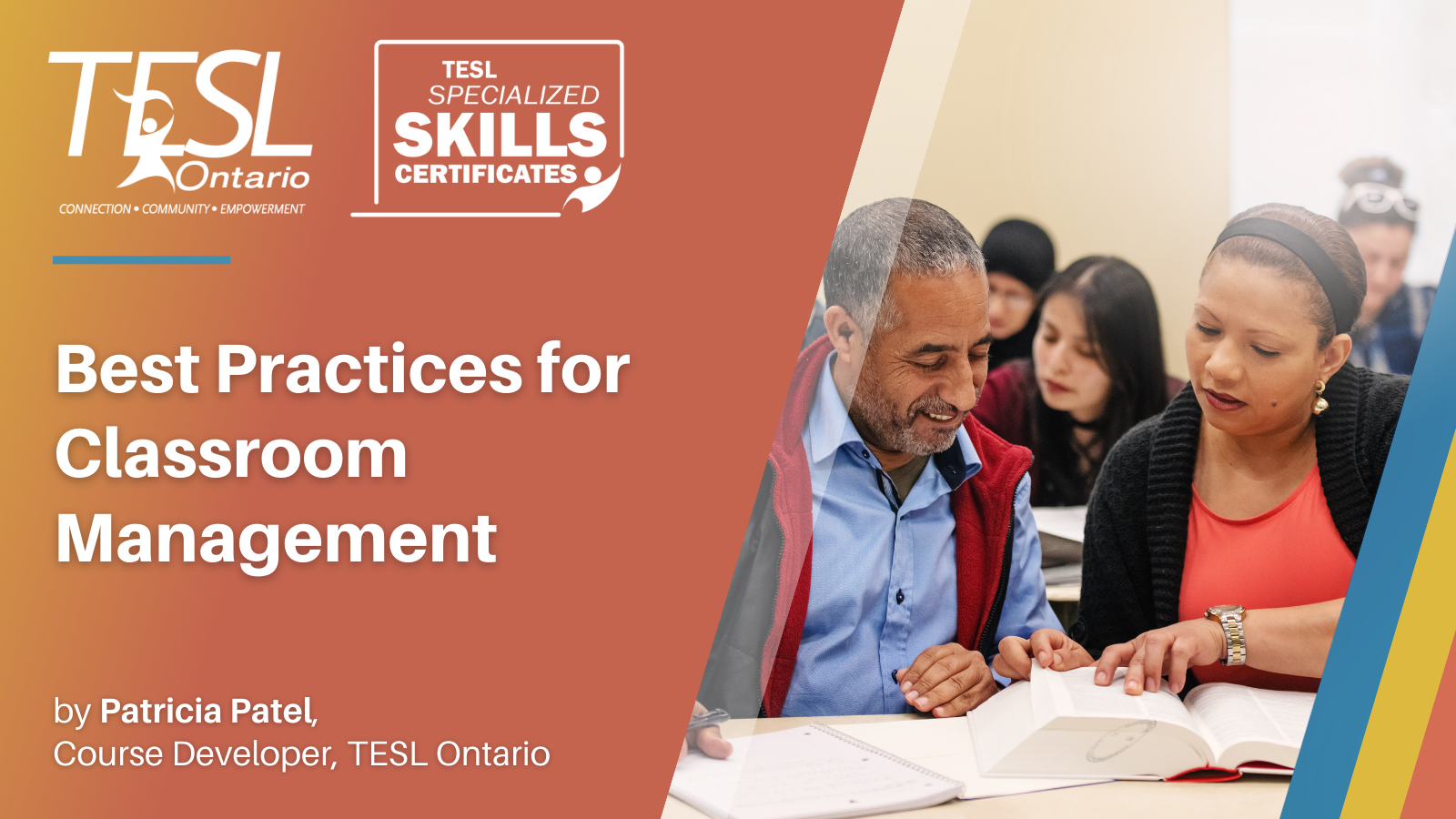
Classroom management for English as a Second Language (ESL) learning environments is different than K-12 learning environments because adult learners come with various unique lived experiences. Some of these might include varied educational experiences, different comfort levels with group work, cultural expectations around authority, and past trauma or settlement stress (Taylor, 2024).
As a result, language educators might face additional challenges related to burnout, heavy cognitive load, and unpredictability when trying to effectively manage the ESL classroom.
I encourage you to consider what effective classroom management means to you. Additionally, consider how you can determine if your classroom management strategies are effective. Studies suggest that effective classroom management might include balancing structure with flexibility, fostering relationships, establishing classroom norms early in the course, and creating a predictable rhythm which includes consistency and routines (Stanford University, 2023). Do you incorporate any of these strategies?
Incorporating effective classroom management strategies supports learner benefits that result in a positive learning climate and translate to improved academic outcomes, stronger learner engagement, and even increased job satisfaction for educators, to name a few (Stanford University, 2023).
Language educators could face challenges, from dynamic and multi-cultural language classroom environments such as frequent classroom disruptions, to mixed-level learning, and various cultural differences in behaviour. Effective classroom management contributes to mitigating these challenges and promoting holistic conflict resolution by providing structure, establishing norms, and encouraging peer support while explaining classroom expectations (Kaufman, 2022).
An assumption for many educators might be that adult learners don’t require as much structure as children do for learning. However, structure offers predictability that supports risk-taking and active classroom engagement, factors that contribute to knowledge acquisition. When a learning environment with adult learners cooperates and works together, educators can experience reduced emotional labour and increased job satisfaction – win, win!
As you reflect on your own teaching strategies, consider if your routines are consistent, what routines you rely on the most, and how you can further include your students in shaping learning expectations. If any of this resonates with you, consider exploring TESL Ontario’s new professional development specialized skills certificate course, Practical Approaches to Language Classroom Management and Conflict Resolution.
References
Kaufman, T. (2022). Building Relationships with Students: What Brain Science Says. Understood. https://www.understood.org/en/articles/brain-science-says-4-reasons-to-build-positive-relationships-with-students
Stanford University. (2023). Increasing student engagement. Teachingcommons.stanford.edu; Stanford University. https://teachingcommons.stanford.edu/teaching-guides/foundations-course-design/learning-activities/increasing-student-engagement
Taylor, A. (2024). Different Classroom Management Styles | Explain Everything. Explain Everything. https://explaineverything.com/blog/inspiring-educators/common-classroom-management-styles-and-how-to-use-them-in-your-teaching/

Leave a Comment
Your email address will not be published. Required fields are marked *